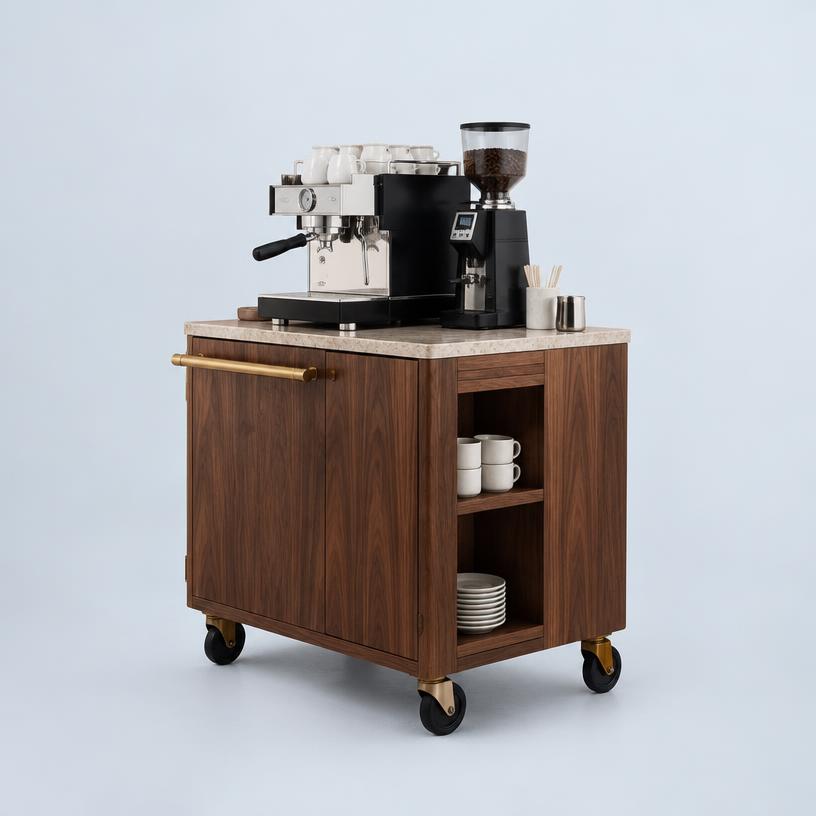
A Guide to Starting a Mobile Coffee Bar: Equipment, Plumbing, and Craft
What you need to know as an independent barista or café owner setting up a mobile coffee cart — water plumbing, electrical load, choosing an espresso machine, and space optimization.
Murat Karahan
Founder & Master Maker · March 18, 2026

Espresso flowing from a solid brass portafilter onto a natural stone countertop
Instead of the high rent, fixed construction costs, and long commitments that come with opening a traditional shop, setting up a mobile coffee bar has become one of the most liberating and profitable business models in today's third-wave coffee world. But being mobile demands flawless barista ergonomics that are anything but ordinary.
1. Electrical Infrastructure: Getting the Wattage Right
The heart of a mobile coffee cart is its power supply. A single-group commercial espresso machine typically draws between 1,800W and 2,400W. Add a 400W professional grinder and an onboard water pump, and a standard 16A single-phase line (around 3,500W) is usually enough.
However, if you will use a double-group machine and steam milk while pulling shots at the same time, you need to build a 32A CEE industrial plug or a three-phase connection into the body from the start. In the carts we build in our workshop, these cable channels are hidden entirely inside the body.
“Electrical cables visible on the countertop don't just ruin the aesthetics; they also create a safety risk around spilled water.”
2. Water and Waste System: Independence and Hygiene
The biggest challenge in mobile service is the water supply. A dual water tank made of food-grade polyethylene (20L clean + 20L grey water) and a quiet Flojet pressure pump turn the cart into a fully independent coffee station anywhere there is power.
For fixed venues, there should be a quick-coupling mains water inlet and a floor drain hidden beneath the cart. That way a cart running on the mains in an office lobby during the week can be detached with a single clip on the weekend and taken to a wedding venue in tank mode.
3. Flow Ergonomics: The Barista's Range of Motion
A barista taking unnecessary steps while making coffee means minutes of delay at a 100-guest event. The grinder, the knock box, and the pitcher rinser should be no more than 40 cm apart.
Recessed wells cut into the natural stone work surface keep the countertop constantly clean and dry, making the show performed in front of the customer captivating.
Takeaways From This Article
- Single-group machines need a standard 16A line; double-group machines need a 32A industrial supply.
- Hybrid plumbing (tank + mains) provides maximum flexibility.
- A recessed knock box and pitcher rinser increase service speed by at least 40%.
Murat Karahan
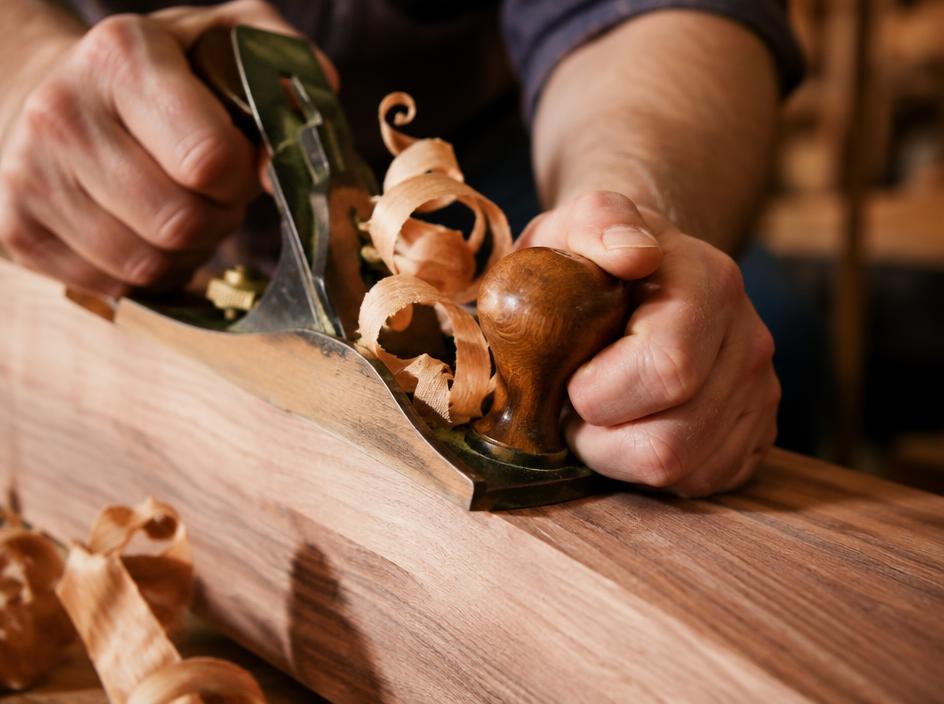
· Founder & Master MakerLeads the design and production processes for solid wood and brass craftsmanship, barista ergonomics, and mobile coffee bar builds at the Mobile Coffee Cart workshop.